Are you looking for resources related to opera music lessons? Opera music is predominantly from Europe. It is most popular in Italy, France and Germany.
It is full of drama, colours, costumes and of course, the music and sound. Opera is a work collaboration between the librettist and music composer. The performance is supported by the opera singers, supporting acts as well as the orchestra. It originated in Italy and hence why many famous opera are in Italian like La Traviata, The Barber of Seville and La Boheme. The singing style of the opera is what makes it really unique as the singing can be part of a dialogue (recitative) or self-contained arias (character solo).
Opera music performances may be a challenging topic to cover in your lessons. However, here are some interesting resources for opera music lessons which may be useful in the general music classroom.
- Queen of the Night aria
- Blob Opera
- Kids Meet An Opera Singer
- Download opera music lesson idea summary
1. Queen of The Night Aria from Mozart’s The Magic Flute Opera
This Magic Flute opera turned 230 years old this year on 30th September. This opera remains one of Mozart’s greatest opera work. It became a viral sensation when “The Queen of the Night” aria appeared on the likes of TikTok and Instagram. People challenge themselves to sing this piece to many degrees of success and fails.
This aria was written by Mozart for his sister-in-law who had a good upper register voice. He composed this song specifically for her to showcase her voice. The video (shown above) was quite a sensation whether in video or photo form.
I showed this video to my students and it immediately caught their attention. Not only was the singing by Diana Damrau excellent, you can view some of the English translation when you turn on the captions. The Magic Flute was performed in German. The captions really does help to give some context to the music and scene performed. The costume and make up is also very dramatic which makes it very eye catching.
I used this video as an introduction to the opera music lesson and it drew all sorts of reactions. It would be good to give some warning to the students who might be wearing earphones. Otherwise, it makes a good morning alarm clock.
2. Blob Opera, a Google Experiment
A little known fact about Google is that the website has a Arts and Culture segment. It is very educational and useful for performing arts and fine arts study. Google Arts & Culture has content which includes virtual museum tours, famous art in digital form and many more. If you visit the site often enough, you will notice some thematic highlights at certain times of the year.
The site is also available as an app on iOS and Android as well. The one section which is most useful for opera music lessons is the Blob Opera. It can be found in the Play section of the site which contains many interactive games and simulations for art appreciation.
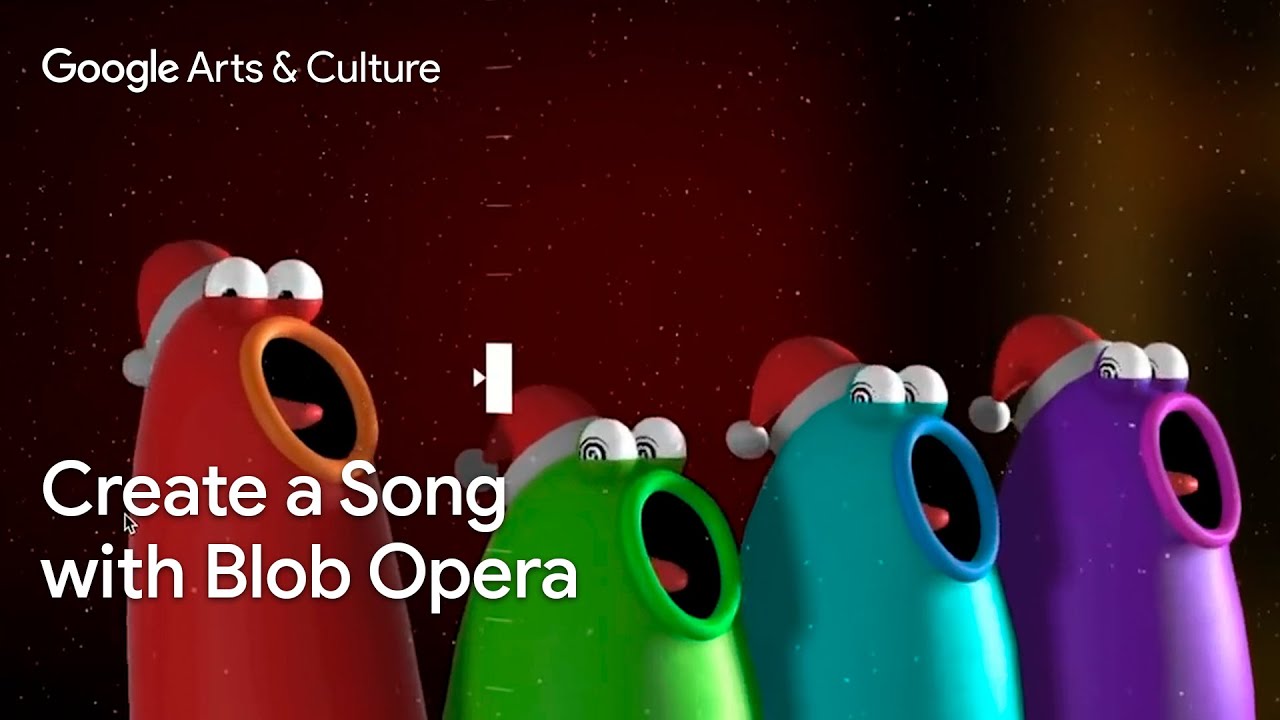
Once you launch the experiment, a blob will appear and it is usually the lowest sounding singer which is the bass singer. Use your mouse to drag the blob up and down to change pitch. More blobs will appear (tenor, alto and soprano) to form a SATB quartet.
In time, the experiment also reveals that dragging the blobs left to right with your mouse will change the vowel (a, e, i, o and u). The blobs appear to be on a performance stage with a red backdrop. It does help a lot that the audio quality coming from the blobs are highly resonant and reverberated, making it sound like the Blob opera is performed in a quiet cathedral.

When you click on the globe icon on the bottom right, you can change the background of the Blob opera which takes the blobs on a world tour. Places like the USA, South Korea, Mexico, Africa are featured and each character of these location are brought out in the background.
When you click on the left side of the globe icon, a song list will appear and you can choose to listen to the blobs singing popular iconic tunes from those location.

The other fun part about Blob Opera is its recording feature. A red circle on the bottom right of the screen is the record button. You can click on it and start recording your own opera with the blobs. You may also mute some of the blobs record vocal solos and highlight any of the voices. Generally, click any of the blobs from the left will create harmony from the quartet.

After the recording is done, you can click on the Share button which is second from the bottom left. Then choose where you want to share it (eg. Google Classroom). Likewise, you can tap on the blue link which will copy the performance link and ready for you to share anywhere.
My students were sharing their work during a live virtual lesson by pasting their opera links in the video call chat box.My primary students were thrilled to play the Blob opera as it is very colourful and engaging. It might make you a little dizzy to see the eyes of the blobs following your mouse but otherwise very entertaining.
A thing to note about this website is that the graphics are pretty heavy, so you may experience latency or lag. It is best to not have too many programs or windows operating in the background.
3. Kids Meet An Opera Singer
I think this video by HiHo Kids YouTube channel is wonderful content. This video is in a casual interview format. It makes digestible content for primary or elementary music students. The child interviewees in the video makes it relatable for young students. On top of that, the video has a lively atmosphere which makes it not too serious.
Depending on how deep you want to dive in Opera music, you may start some discussions about opera performances. Before showing the video, get your students to write down questions about opera singers. After that, get them to find or look out for the answers during the video. This way, the student learn to analyze the interview and filter necessary information.
4. Opera Glossary
Use this playlist to engage students in learning about terminology in Opera performance. The videos are not very long and concise enough for opera music study. A few ways to make really good use of this playlist is to get students to write down opera terminology.
Download article to read later
Related posts
- Getting Started On Asynchronous Music Lessons
- Transpose Chrome Extension: A Free and Useful Tool for Music Transcription and Practice
- Student Selector Tool in Google Classroom App
- Malaysian Music Teaching Resources
- Diwali Music Lesson Ideas
- Gong Xi Gong Xi – Chinese New Year Tune for Chrome Music Lab
- Mid-Autumn Festival | Mooncake Festival | Moon Themed Music Lesson Ideas


4 thoughts on “Resources of Opera Music Lessons”